
Don't struggle financially

Don't struggle financially
Start investing your small change today

What is the Intrinsic and Extrinsic Clot Pathway?


The Intrinsic and Extrinsic Clot Pathway
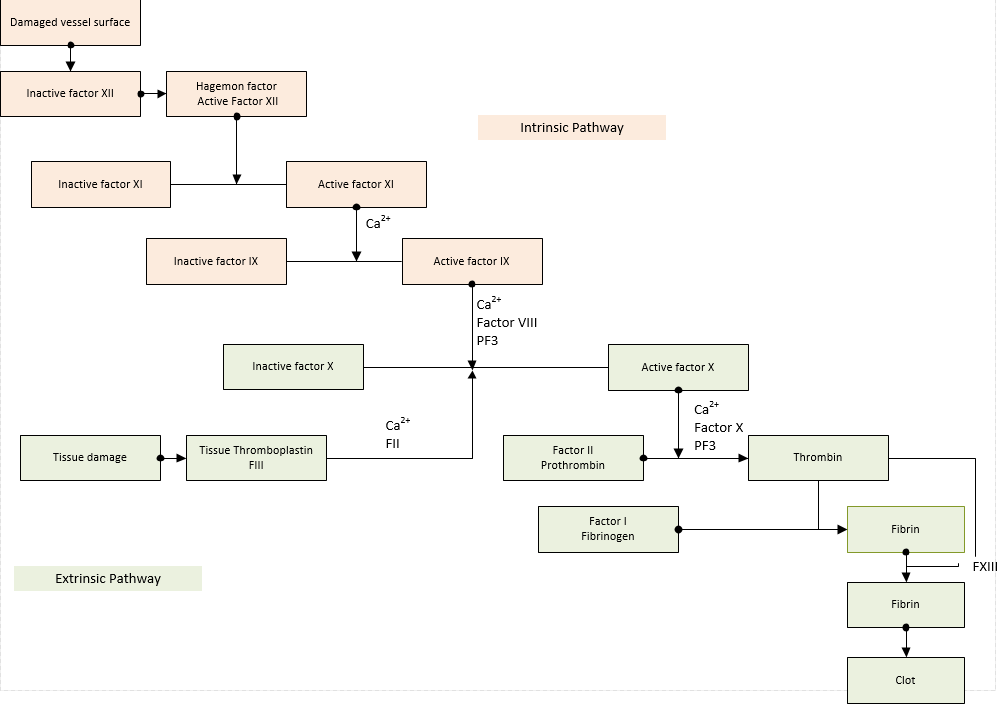

When damage occurs to tissues, or there is damage to a nerve, a number of vascular responses occur. 

Neutrophils are attracted to the injured site which stimulates the release of histamine, basophils, platelets, mast cells, and kinins. 

Prostaglandins and lipids are released from the damaged cells. Vasodilation and increased permeability of blood vessels cause heat, redness, and swelling. Pain occurs from damage to the nerves, as well as toxic chemicals which are released from microbes. Kinins can irritate nerve endings while prostaglandins intensify and prolong the pain.

Increased blood flow to tissues causes blood clotting factors which leak into the tissues which set the clotting sequence in motion. Fibrinogen in the blood converts to fibrin making a meshing over the damaged site to trap the microbes and stop the spread of infection.


Comments

Start Investing Your Loose Change

Popular posts from this blog

Discipline of Toxicology and Specialty Fields

Many of the different professional groups may be involved in dealing with toxic chemicals including chemists, environmental scientists, food scientists, forensic scientists, clinical scientists, and regulators. Depending on their professional roles, they may take different approaches to dealing with toxic chemicals and their effects.  5 Types of Toxicology Specialty Fields Descriptive toxicology Involves toxicity testing of drugs and chemicals. Decides if a substance is toxic and the level of toxicity. Mechanistic toxicology Involves how toxic chemicals cause toxicity effects at the biochemical and system level e.g. neurochemical site blockage Regulatory toxicology Assessment of therapeutic and consumer chemicals by regulatory bodies. Various federal government agencies set standards for use, transport, and storage.  Clinical toxicology Clinical Toxicologists ask the question, what was the victim poisoned with? Their conduct is in support of medi...

Vascular Cellular Repair and inflammation response

Sequence Of Events for Vascular Cellular Repair and the Inflammation Response A break in the skin occurs Bacterial reproduction increases Macrophages engulf bacteria Macrophages secrete cytokines Activated mast cells secrete histamine Histamine and cytokines increase dilation of blood vessels White blood cells (WBCs) adhere to capillary lining (pavementing) WBCs migrate to injured site via endothelial cellular gaps via diapedis movement Monocytes turn into macrophages Macrophages and neutrophils engulf pathogens (phagocytosis) Red Blood Cells increase in concentration causing redness and head An increased amount of fluid migrates to the area causing swelling and pain. Tissue repair commences and systemic responses may be evident e.g. fever What is involved in the tissue repair response? Resolution – the toxin is neutralized, oedema decreases, capillary permeability decreases and vasoconstriction occurs Regeneration & replacement – proliferation...